Desire By Design: The Psychology of Scarcity and Why Collectors Can't Look Away
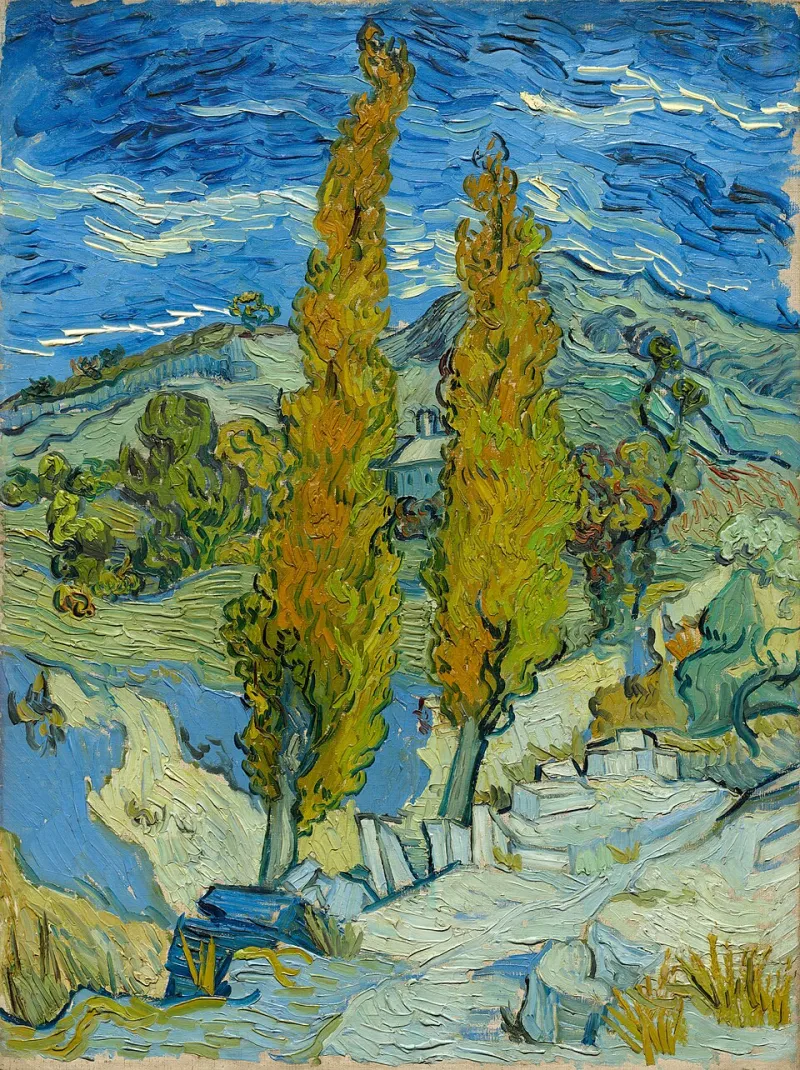
Photo: Vincent van Gogh, Public domain, via Wikimedia Commons
There is a moment every serious collector knows well. It arrives without warning — a notification on a phone, a whisper in an online forum, a countdown clock ticking toward zero on a creator's website. The item in question may be a hand-numbered art book, a limited digital print, or a vinyl pressing capped at five hundred copies. The details vary. The sensation does not. Something rare is about to exist in the world, and the question is whether you will be among the few who possess it.
This is the architecture of modern collecting culture, and it is more deliberately constructed than most enthusiasts care to admit. At Krem Editions, we have built our editorial identity around the premise that limited worlds generate infinite imagination — and the phenomenon of scarcity-driven desire is perhaps the purest expression of that philosophy in action.
The Science Behind the Shortage
Psychologists have long understood that human beings assign disproportionate value to things perceived as rare. The principle, often described as the scarcity heuristic, holds that limited availability functions as a proxy for quality. When something is difficult to obtain, the mind interprets that difficulty as evidence of worth.
Dr. Cialdini's foundational research on influence, widely taught in American business schools, identified scarcity as one of the six primary levers of persuasion. But contemporary collecting culture has moved well beyond simple marketing tactics. What collectors describe today is something closer to emotional investment — a sense that owning a finite object places them inside a story with a fixed cast of characters.
"When I bought one of the early Risograph-printed zines from a Brooklyn illustrator I followed for years," says Marcus T., a 34-year-old graphic designer from Chicago, "it wasn't about the object alone. It was about being part of a moment that couldn't be repeated. That print run was three hundred copies. Three hundred people in the world have that specific edition. That means something to me."
This sense of shared exclusivity — belonging to a community defined by what it holds — is a recurring theme among collectors across disciplines, from limited-edition sneakers to hand-bound literary chapbooks.
Digital Scarcity and the NFT Experiment
No conversation about artificial scarcity in contemporary culture can avoid the turbulent rise and complicated legacy of non-fungible tokens. Between 2020 and 2022, the NFT market offered what appeared to be a compelling proposition: digital scarcity, enforced by blockchain technology, applied to art, music, and entertainment media.
The results were instructive, if uneven. At its peak, the market demonstrated that collectors were genuinely willing to assign substantial financial and emotional value to verifiably limited digital objects. The subsequent contraction revealed that scarcity alone is insufficient — the underlying creative work, the community surrounding it, and the perceived integrity of the creator all contribute to lasting value.
Independent creators who approached NFTs as an extension of an already-devoted community fared considerably better than those who entered purely for speculative reasons. Artists like those behind small-circulation illustrated fiction projects discovered that their existing audiences translated naturally into digital collecting ecosystems. The lesson, for those attentive enough to absorb it, was that scarcity amplifies existing value rather than manufacturing it from nothing.
The Creator's Dilemma: Exclusivity vs. Access
For independent publishers and artists, the decision to release work in limited quantities is rarely straightforward. Every finite print run or numbered edition represents a deliberate choice to exclude — and exclusion carries ethical weight that thoughtful creators take seriously.
Jamila R., who produces hand-illustrated art books through her small studio in Portland, Oregon, describes the tension candidly. "I wrestle with it constantly. I want my work to reach as many people as possible. But I also know that when I printed five hundred copies of my last book and they sold out in a weekend, something happened in my community that a print-on-demand edition simply cannot replicate. People organized reading groups. They traded copies. They took photographs of the book in unusual places and shared them online. The scarcity created a kind of stewardship."
This notion of stewardship — the idea that collectors become custodians of cultural artifacts rather than mere consumers — represents one of the most compelling arguments for limited-edition publishing. Objects that are finite invite a different quality of attention than those available in perpetuity.
Fandom, Identity, and the Collector's Self
Beyond psychology and economics, there is a dimension of collecting that touches on identity formation. In American popular culture, what one chooses to collect — and what one is fortunate or dedicated enough to acquire — functions as a form of self-expression.
The communities that form around limited-edition entertainment products are frequently among the most engaged and creatively generative fandoms in existence. Small-press horror fiction communities, limited-run board game enthusiasts, and collectors of hand-printed illustrated poetry all demonstrate a pattern: finite supply concentrates passion rather than diluting it.
This concentration has commercial and cultural consequences that extend far beyond the initial release. Limited drops generate secondary markets, critical discourse, and long-tail visibility that mass-market products rarely achieve. A book printed in five hundred copies and reviewed obsessively by three hundred devoted readers may ultimately reach more meaningful cultural penetration than a title printed in fifty thousand copies and forgotten within a quarter.
The Future of Finite
As digital distribution continues to commoditize access to entertainment, the appetite for genuinely limited creative work shows no sign of diminishing. If anything, the ubiquity of infinite content has intensified the hunger for the rare and the considered.
The most successful independent creators operating in this space share a common understanding: scarcity is not a marketing trick. It is a creative commitment. It signals to an audience that the work was made with intention, that its existence in the world is deliberate and bounded, and that the relationship between creator and collector is one of mutual respect.
At Krem Editions, this philosophy is not merely observed — it is practiced. Limited worlds, we have always believed, are not impoverished worlds. They are concentrated ones, dense with meaning precisely because their edges are defined. The art of scarcity, when executed with integrity, does not diminish imagination. It focuses it.