Sealed Forever: The Collector's Paradox of Owning What You Cannot Touch
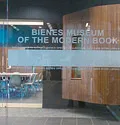
Photo: Sbrad22, CC BY-SA 4.0, via Wikimedia Commons
Somewhere in a spare bedroom in Portland, Oregon, there is a shelf of graphic novels that has not been disturbed in four years. The books are arranged by publisher, then by edition number, their spines uncracked, their pages unread. Several are still in their original shrink-wrap. Their owner—a collector who has been assembling the library since his early twenties—describes the shelf with a mixture of pride and something that sounds, on reflection, like mild unease.
"I know what's in all of them," he says. "I've read the digital versions, or I've seen enough coverage that I understand the work. But the physical copies—those are different. Those are the real ones. And the real ones, I don't touch."
This is not an unusual position among serious collectors of limited-edition print culture. It is, in fact, so common that it has generated its own vocabulary. In collector communities, the preserved, unread copy is often called a "grail"—an object whose value is inseparable from its condition, and whose condition depends entirely on its not being used.
The Object and Its Function
Art books and graphic novels occupy a peculiar position in the broader landscape of collectible culture precisely because they are, by design, experiential objects. Unlike a numbered print intended for display or a sculptural figure meant to be observed from a distance, a book invites a specific kind of physical engagement: the turn of a page, the resistance of a binding, the particular weight of a well-made volume in the hands. These are not incidental qualities. For the publishers and artists who produce limited-edition print work, they are often the entire point.
The tension between that intention and the preservation imperative of serious collecting is real, and it is growing. As the secondary market for limited-edition graphic novels and art books has matured, condition has become an increasingly decisive factor in valuation. A first-edition art book in near-mint condition may command a price several multiples above the same book showing signs of reading—spine stress, minor page curl, the faint impression of a thumb on a dust jacket corner.
The market, in other words, has begun to penalize use. And collectors, rational actors operating within that market, have responded accordingly.
Preservation as Practice
For collectors who have built significant holdings in limited-edition print work, the logistics of preservation have become a discipline unto themselves. Archival-quality boxes, climate-controlled storage, UV-filtering display cases—these are not extravagances but standard practice for anyone serious about maintaining the condition of high-value pieces.
Several collectors interviewed for this piece described purchasing duplicate copies of particularly significant titles: one to preserve, one to read. It is a solution that speaks directly to the depth of the dilemma. The desire to engage with the work remains intact. The conviction that the pristine copy must remain pristine is simply stronger.
"I bought two copies of everything I really cared about for about three years," says a Chicago-based collector who focuses on independent and small-press graphic novels. "One to read, one to keep. Eventually I stopped reading the reading copies too, because I'd get anxious about the condition and just go look at the digital version instead. At some point I had to ask myself what I was actually doing."
What she was doing, arguably, was participating in a broader cultural negotiation about the nature of value—one that limited-edition publishing has accelerated but did not invent.
What the Creator Intended
The question of authorial intention haunts this conversation in ways that are difficult to resolve. When a publisher produces a limited-edition art book with hand-bound signatures, letterpress-printed endpapers, and a tipped-in original print, the implicit message is that the object deserves to be handled, examined, and lived with. The craft communicates care, and care invites reciprocity.
Yet the same qualities that signal exceptional craftsmanship also signal exceptional collectibility. The more beautifully an object is made, the more precious it becomes—and the more precious it becomes, the less likely it is to be touched.
Some creators have begun to engage with this paradox directly. A small number of limited-edition publishers have started including explicit language in their colophons or accompanying materials encouraging readers to use their copies, framing wear as evidence of a life well-lived rather than a diminishment of value. Others have moved toward release models that deliberately complicate the preservation calculus—books designed to change over time, or editions that include elements intended to be consumed, altered, or completed by the reader.
These gestures are, at present, more philosophical than practical. They do not change the market dynamics that reward pristine condition. But they represent a meaningful counterargument: that the value of a limited edition is not located in its untouched state but in the encounter it was built to facilitate.
The Unanswerable Question
There is no clean resolution to the collector's paradox. The impulse to preserve is not irrational—it is, in many cases, an act of genuine stewardship, ensuring that significant works survive in their intended form for future audiences. The impulse to engage is equally legitimate, rooted in the fundamental purpose of the objects themselves.
What the paradox does illuminate, with uncomfortable clarity, is the degree to which collecting and consuming have become, for many participants in limited-edition culture, separate activities—parallel relationships with the same object that rarely, if ever, converge.
The collector in Portland returns to his shelf periodically. He adjusts the arrangement, checks the condition of the spines, occasionally photographs a particularly significant piece for his archive. He knows the contents of every volume. He has never opened most of them.
"Someday," he says, with the particular confidence of someone who suspects that someday may never arrive, "I'll read them all."
It is, perhaps, the most honest statement a collector can make: an acknowledgment that the relationship between an object and its intended experience is complicated, and that sometimes the most powerful thing a book can do is simply exist—sealed, intact, and full of unrealized potential—on a shelf that no one else can touch.