Admission, Not Acquisition: The American Archives Where a Yearly Fee Buys You the Unbuyable
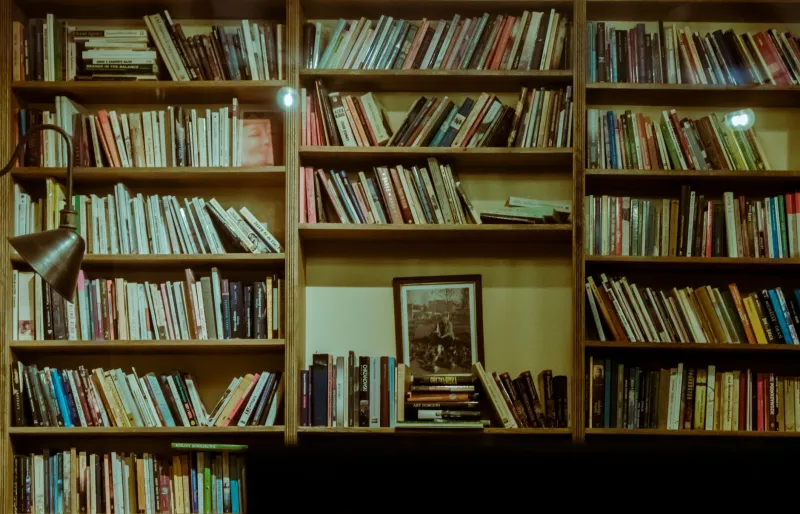
In a Manhattan townhouse a few blocks from the noise of Fifth Avenue, a visitor signs a ledger, presents a membership card, and disappears into a reading room where the shelves hold editions that have not appeared on the open market in generations. Nothing here is for sale. Nothing here can be borrowed and taken home. The only transaction that matters happened months earlier, when the annual dues cleared.
For most of the collecting world, value is measured in ownership. But a parallel economy has flourished in the United States for over two and a half centuries — one in which the rarest cultural objects are held in common by a small, paying public, and access itself becomes the luxury good.
A Model Older Than the Republic
The subscription library is one of America's oldest cultural institutions. The Library Company of Philadelphia, founded by Benjamin Franklin in 1731, was funded not by endowment or taxes but by the annual payments of its members — a radical proposition at the time, and one that quietly shaped the reading habits of the young nation. The Boston Athenæum, the Redwood Library in Newport, the Mercantile Library of Cincinnati: each began as a collective wager that a group of committed readers could assemble a collection no individual could afford.
What is striking today is not that these institutions survived, but that they have become more exclusive in effect even as their missions remain nominally democratic. As rare book prices have climbed into figures once reserved for Old Master paintings, the gap between what a private collector can buy and what an archive can hold has widened dramatically. A single illuminated manuscript or first-edition Melville can outstrip the annual budgets of entire institutions. The result is a strange inversion: the members-only library now often owns what even wealthy collectors cannot pry loose.
The Gatekeepers of Access
Running such an archive is a peculiar vocation. Directors describe themselves less as curators of objects than as custodians of relationships — between members and the collection, and between the present and the past. The Grolier Club in New York, the John Carter Brown Library in Providence, and dozens of smaller regional societies operate on the same principle: the collection is permanent, the membership turns over, and the annual fee functions as a toll on proximity rather than a purchase.
These gatekeepers make deliberate, sometimes controversial choices. A rare portfolio of prints may be shown once a year, under supervision, to a limited roster of members. A literary archive may be accessible only to researchers who apply in writing. The rationale is preservation — light, handling, and humidity are all enemies — but the effect is unmistakably one of ritual. The archive opens on its own schedule. The member adapts.
When Access Is the Only Affordable Luxury
Here lies the tension that makes this model newly relevant. The market for rare books, limited-print graphic novels, and collectible art editions has become prohibitively expensive for all but a narrow band of buyers. For the vast majority of people who care about these objects, ownership is simply off the table.
The subscription archive offers a different answer: you will never own the thing, but for a few hundred dollars a year, you can sit with it, study it, and return to it as often as the rules allow. In an era when the drop economy turns collecting into a competitive sport, the annual-membership archive reframes the entire proposition. It replaces the thrill of acquisition with the steadier pleasure of belonging.
Critics note the obvious objection — that membership dues at some institutions run high, and that access remains stratified by geography and social capital. Many of these libraries are concentrated in older East Coast cities, their waiting lists opaque, their cultures clubby. The digital age has softened some barriers: digitization projects and virtual fellowships have extended the reach of collections that were once accessible only to those within commuting distance.
The Future of Having Without Holding
Whether this model scales is an open question. New subscription archives and member-supported collections have emerged in Los Angeles, Chicago, and Austin, often attached to independent presses, print studios, or small-press publishers who recognize that their audiences want sustained engagement rather than one-time purchases. Some graphic novel publishers now offer annual memberships that grant reading-room access to proofs, process art, and out-of-print editions — material that would otherwise vanish into private hands.
The deeper shift is philosophical. For two centuries, American collecting culture has equated value with possession. The subscription archive proposes the opposite: that the highest form of collecting may be the one in which nothing is ever carried out the door. The book stays on the shelf. The print stays in the flat file. What the member takes home is the memory of proximity — and the guarantee of a return visit.
For those priced out of the auction room, that may be the most valuable edition of all: a year of access, renewed annually, to worlds that were never for sale in the first place.