Sold by the Pallet: Inside the Auction Where a Publisher's Legacy Went Under the Hammer
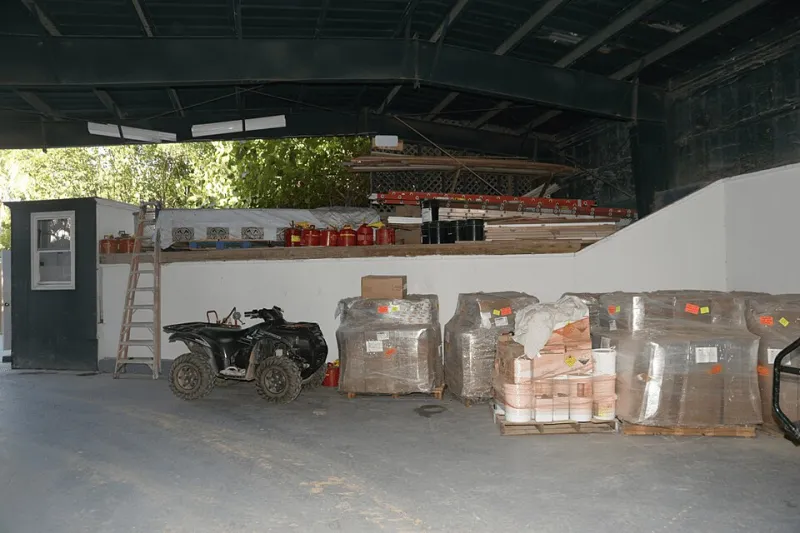
Photo: Federal Bureau of Investigation, Public domain, via Wikimedia Commons
The email arrived on a Tuesday morning, the kind of plain-text notice that lands without ceremony in the inboxes of a few hundred collectors: Liquidation sale. All stock must go. No holds, no reserves. By Wednesday, the checkout page had crashed twice. By Friday, the independent press that had spent twenty years publishing some of the most admired illustrated editions of its niche was, for all practical purposes, a memory measured in cardboard.
This is the archive sale — the quiet, often chaotic event that follows the death of a small publisher. And in an era when boutique presses and limited-run entertainment studios are closing at a steady clip, it has become one of the most consequential rituals in collecting culture.
The Warehouse Is the Archive
To understand what an archive sale actually is, you have to abandon the image of a pristine vault. For most small presses, the "archive" is a leased warehouse bay in an industrial park — pallets of overstock, flat files of unframed prints, a shelf of printer's proofs, and, if the press was old-fashioned enough, the original plates or film used to produce its most celebrated editions.
When a publisher ceases operations, these objects enter a strange legal and emotional limbo. The books themselves were never meant to be collector items; they were meant to be sold. But the moment the press announces its closure, every remaining copy of a sold-out edition is instantly transformed. A title that traded steadily at list price for a decade can triple overnight, not because the book changed, but because the promise of availability did.
Liquidators, who see cardboard and weight, price accordingly. Collectors, who see scarcity and provenance, price very differently. The archive sale is where those two valuations collide.
From Forklift to Frenzy
The typical sequence unfolds with grim predictability. First comes the insider window: distributors, retail partners, and longtime customers get first access, often at steep discounts. Then the general public is invited, and the site groans under traffic. What survives that phase — usually the oddball formats, the damaged copies, the titles nobody wanted — gets boxed and sold to jobbers, who scatter the remnants across secondary marketplaces at markups that would have appalled the original publisher.
The most charged moments, however, involve the physical apparatus of publication itself. Printer's proofs, marked-up page dummies, and original plates rarely appear in these sales, because rights holders often reclaim them. But when they do surface, they become the true grails: not editions of a work, but evidence of its making. A collector who owns a proof copy of a beloved art book owns something no later reprint can replicate — a document of the press's decision-making, its corrections, its hesitations.
Preservation or Liquidation?
Here is the question that haunts every archive sale: does dispersal destroy a legacy, or does it democratize one?
The pessimistic reading is straightforward. A unified archive — complete runs, consistent condition, documented provenance — is a scholarly and cultural asset. Scattered across hundreds of private collections, that coherence evaporates. Future researchers may struggle to find intact sets; condition grading becomes a lottery; and the middle layers of the story — the editorial correspondence, the design files, the business records — often vanish entirely, discarded as worthless by liquidators who deal in inventory, not history.
But the optimistic case deserves a hearing. Small presses frequently overproduce relative to demand, and closure is often the first time their work becomes affordable. A teacher who could never justify a premium-priced art book might buy two in a liquidation sale — one to read, one to keep. Dispersal, in this view, is not the death of a legacy but its widest possible seeding. The archive stops being an institution's possession and becomes a network of stewards.
What Collectors Should Watch For
For those tempted to participate in the next archive sale, a few disciplines separate the steward from the speculator.
First, understand what you are buying. Liquidation stock is frequently unexamined; shelf-wear, water damage, and incomplete sets are common. Reputable liquidators disclose condition; the best provide photographs. Second, mind the rights. Purchasing a book conveys ownership of the object, never the intellectual property. Beware of sellers implying that acquisition of stock includes any claim on the work itself — it does not.
Third, and most important, think in decades. The titles that matter most after a press dies are rarely the ones discounted most steeply. They are the editions the press was proudest of, the ones whose production values can never be economically repeated. Those are the objects that will define the publisher's reputation once the warehouse is empty.
The Afterlife
A press's final sale is, in a sense, its last act of publishing: it decides who will hold the work forward. Some archives end up in university special collections, catalogued and climate-controlled. Many more end up on shelves in apartments in Chicago, Portland, and Philadelphia — read, lent, shelved beside other orphaned editions from other dead presses.
There is no tidy verdict on whether that constitutes preservation. But there is a certain fitting symmetry in it. Limited editions were always about distributing something precious as widely as meaningfully possible. An archive sale, whatever its indignities, completes that distribution. The publisher disappears; the editions do not. And every so often, a collector holding a final-inventory copy will notice the small printed line at the back — the press's address, its colophon, its signature — and understand that they are now part of the record.