Gatekeepers of the Vanishing: The Quiet Power of Those Who Choose What Survives
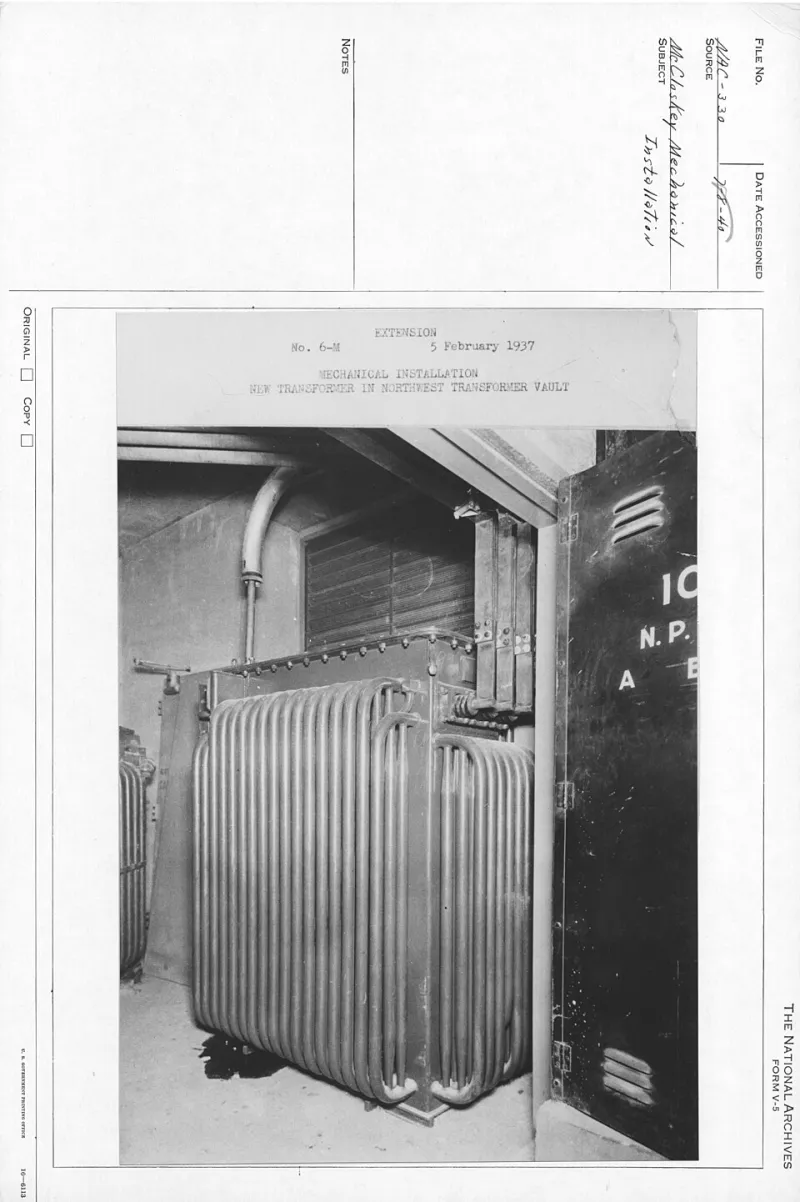
Photo: General Services Administration. National Archives and Records Service. Office of the National Archives. (9/19/1966 - 4/1/1985), Public domain, via Wikimedia Commons
In a climate-controlled vault outside Pittsburgh, a preservation specialist opens a flat file containing the original plates for a graphic novel that sold fewer than 900 copies in 1994. The book has no digital backup. The publisher dissolved a decade ago. If she doesn't act within the next two years, the acetate will begin to delaminate, and a work that shaped a small but devoted corner of American comics culture will simply cease to exist in any form anyone can experience.
No committee voted on this. No public consultation was held. One person, with one budget line and one deadline, is deciding whether a world survives.
This is the archivist's dilemma — and it is far more consequential than most collectors realize.
The Invisible Ballot
We tend to imagine preservation as a neutral act: something old is fragile, so it is saved. In practice, preservation is an act of selection, and selection is an act of power. Rights holders weigh the cost of restoration against projected demand. Licensing directors ask whether a reissue might complicate an existing deal. Archivists triage collections that could consume their entire annual budgets with a single conservation project.
The result is a quiet, ongoing referendum on cultural memory — one in which the general public never casts a vote. A cult animated series from the early 2000s may live or die based on whether a single rights coordinator can locate the original masters before a storage facility's lease expires. A limited-edition art book may never be reprinted because the surviving files were lost in a bankruptcy auction, and nobody flagged the loss until collectors began asking.
"People assume that if something was published, it's safe," says one preservation librarian we spoke with at a midwestern university, who asked not to be named because she regularly negotiates with rights holders. "It isn't. Half of what I worry about is technically somebody's property. If they don't care, and I can't get permission, it doesn't matter how much I want to save it."
When Collectors Become the Archive
The most striking pattern in modern preservation history is how often the official institutions arrive last. Fan communities — organized through forums, Discord servers, and conventions — have rescued television episodes, regional video game builds, and small-press comics that no studio or library considered worth cataloging.
The examples are now legend among collectors. Episodes of American game shows survived for decades only because home recordings existed in private attics. Early print runs of now-canonical independent comics were preserved not by publishers but by readers who kept their copies in plastic sleeves. In several documented cases, the sole surviving copy of a work was a collector's personal duplicate — a second printing bought on a whim at a convention in Ohio.
This rescue work fills a genuine void, but it also raises uncomfortable questions. When a fan restores and distributes lost media, they are making the same curatorial decision an archivist would — without the training, the institutional accountability, or, frequently, the legal right. Enthusiasm is not the same as expertise, and a well-meaning restoration can introduce errors that become permanent once it circulates.
"The line between preservation and piracy gets blurry fast," the librarian notes. "And the people making that call are usually eighteen, unpaid, and terrified of lawyers."
Curation as Gatekeeping
Defenders of institutional selection point out that not everything can — or should — be saved. Storage costs money. Conservation requires skilled labor. A archives that tried to preserve everything equally would preserve nothing well. Selection, they argue, is not gatekeeping but triage.
Critics counter that triage systematically favors works with existing commercial value, established fanbases, or institutional connections. A limited-edition release backed by a famous illustrator will always beat an equally innovative work by an unknown creator when budgets are allocated. The archive, in other words, does not merely reflect cultural memory — it manufactures it, retroactively, by deciding decades in advance what future scholars and collectors will have access to.
For the limited-edition world, the stakes are existential. A numbered print run is a promise of permanence: only 500 exist, but all 500 will always exist. When masters are lost, when rights lapse into confusion, when a rights holder simply declines to reissue, that promise quietly breaks. The edition remains scarce — but scarcity without availability is just erasure with better branding.
Toward a More Democratic Memory
What would fairer selection look like? Some archivists advocate for open registries of at-risk works, so collectors and institutions can coordinate before materials degrade. Others argue for stronger orphan-works legislation in the United States, which would let preservationists act on works whose rights holders cannot be located — a category that includes a startling share of small-press and limited-edition output.
Collectors, for their part, can do more than hoard. Documenting editions, photographing spines and colophons, and recording publication details creates a distributed metadata layer that no single archive could match. The collector who scans a slipcase today may be the reason a future reissue is possible.
The specialist in Pittsburgh eventually saved her plates. The book will be scanned within the year, and a modest facsimile edition is under discussion. Nine hundred readers became a few thousand. A small world, briefly, grew.
But she is quick to deflect any suggestion of heroism. "For every one of these, there are fifty I couldn't get to," she says. "Somebody decided those were the ones we could lose. I just hope they were right."
It is a hope the entire collecting world shares — and, mostly, takes on faith.