Dead on Arrival, Worth a Fortune Today: The Strange Economics of Discontinued Collectibles

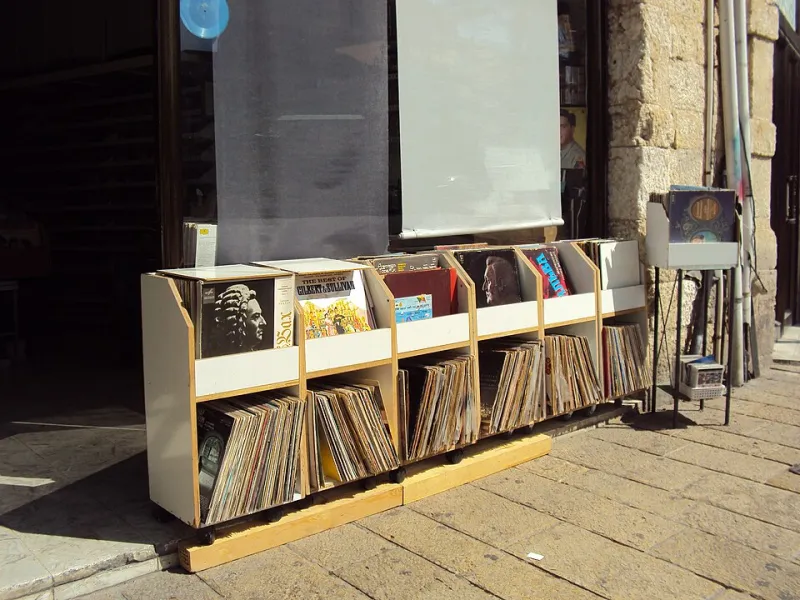
Photo by Photo by sebastien vincent on Unsplash on Unsplash
When a company pulls a product from shelves, it rarely imagines that decision will transform ordinary merchandise into coveted artifacts commanding thousands of dollars on the secondary market. The phenomenon of discontinued product lines ascending to extraordinary resale valuations reveals something profound about American consumer culture—and the peculiar alchemy that turns abandonment into desire. From vintage action figures to orphaned video game cartridges, the aftermarket has become an economy unto itself.
The Moment a Product Stops Being a Product
There is a precise, if invisible, threshold at which a manufactured object ceases to be a commodity and becomes something closer to a relic. It rarely happens at the moment of discontinuation. In the weeks and months following a product's quiet retirement, it typically lingers on clearance racks, overlooked and underpriced. Then something shifts. Supply contracts. Nostalgia matures. A new generation discovers what the previous one once took for granted.
Consider the trajectory of certain Kenner action figures from the late 1970s and early 1980s. When Kenner ceased production of its original Star Wars line, those figures were simply toys that children had outgrown. Decades later, sealed examples of rare variants—figures like the vinyl-caped Jawa or the double-telescoping lightsaber Luke Skywalker—now routinely sell for five figures at auction. The products themselves did not change. The cultural context surrounding them transformed entirely.
This pattern repeats across categories with remarkable consistency. The Nintendo World Championships cartridge, produced in extraordinarily limited quantities for a 1990 gaming competition, has sold for over $100,000. Air Jordan sneakers from specific limited regional releases have commanded multiples of their original retail price on platforms like StockX and GOAT. The underlying logic is always the same: finite supply collides with expanding demand, and the result is a market that the original manufacturer never designed, anticipated, or profited from.
The Reseller as Archaeologist
Within this landscape, a new class of entrepreneur has emerged—one who operates less like a traditional retailer and more like a cultural archaeologist. The most sophisticated resellers in this space possess encyclopedic knowledge of production runs, regional distribution anomalies, factory variants, and the subtle packaging differences that separate a common edition from a genuinely scarce one.
This expertise is not trivial. It requires years of immersion in collector communities, study of original manufacturer documentation, and the development of authentication instincts that no algorithm has yet replicated. A reseller who can identify a first-run pressing of a sought-after vinyl record by the matrix inscription in its dead wax, or who recognizes a misprint error on a 1986 Transformers card that distinguishes it from millions of standard issues, possesses knowledge that translates directly into financial advantage.
The tools of the trade have evolved considerably. Online communities—Reddit forums, Discord servers, dedicated collector databases—have democratized access to information that once circulated only through physical conventions and word of mouth. Yet paradoxically, this democratization has not eliminated the knowledge gap between expert and casual buyer. It has, if anything, rewarded depth of expertise more than ever, because the barrier to entry for surface-level participation has dropped while the ceiling for specialized knowledge has risen.
Why Companies Leave Money on the Table
One of the more counterintuitive aspects of this economy is the consistent reluctance of original manufacturers to participate in it. When a discontinued product begins generating spectacular secondary market prices, the logical corporate response might seem obvious: reissue the product, capture that demand, and reclaim the revenue. Yet companies frequently resist this impulse, and when they do attempt reissues, the results are often commercially disappointing.
The reason illuminates something essential about the psychology of scarcity. Collectors are not simply purchasing a physical object—they are purchasing a position within a hierarchy of authenticity. A reissue, however faithful, cannot occupy the same cultural space as an original. It lacks the provenance, the age, and crucially, the unambiguous finitude that makes the original meaningful. When Atari briefly attempted to revive certain classic hardware lines, the collector community's response was largely indifferent. The appeal of an Atari 2600 in working condition is inseparable from its status as a survivor of a specific historical moment.
There is also the matter of what economists call the option value of scarcity. Once a manufacturer reissues a discontinued line, it fundamentally alters the market for original examples—not always by crashing prices, but by introducing uncertainty. The collector who paid a premium for an original must now contend with the possibility that the manufacturer will flood the market further, or that future buyers will conflate original and reproduction. This uncertainty itself diminishes the pleasure of ownership, which is as much a psychological as a financial proposition.
The Vault Mentality and Its Discontents
For the most devoted participants in this economy, collecting discontinued products has taken on an almost archival quality. Storage facilities in cities like Los Angeles, Chicago, and New York contain carefully climate-controlled collections of sealed vintage merchandise that have not been touched since their original retail packaging was sealed. These collectors speak of their holdings in terms that echo those of institutional curators—provenance, condition grading, archival preservation.
The grading services that have formalized this language—Wata Games for video cartridges, CGC for comics, PSA for trading cards—have introduced a quasi-official vocabulary of authenticity that simultaneously legitimizes the market and raises its stakes. A cartridge graded 9.8 by Wata is not merely a well-preserved object; it is a certified artifact whose value is now partially underwritten by institutional credibility.
Yet this formalization carries its own tensions. Purists within collector communities sometimes resist the financialization of what they regard as a cultural practice, arguing that grading services and investment-minded buyers have distorted markets and priced out the passionate amateurs who built those communities in the first place. It is a critique that echoes broader anxieties about the collision of art, commerce, and institutional validation—a conversation that extends well beyond the world of discontinued action figures.
The Aftermarket as Cultural Record
Perhaps the most significant function of the discontinued collectibles market is the one least often acknowledged: it operates as an informal archive of American popular culture. The objects that companies deemed unworthy of continued production, and that consumers once discarded without ceremony, have been preserved by collectors whose motivations were initially personal and emotional rather than financial.
In that sense, the resurrection economy is not merely a story about money. It is a story about what a culture chooses to remember, and who bears the cost and labor of that remembrance. The collector who spent decades carefully storing a complete run of a forgotten toy line has performed, however inadvertently, an act of cultural preservation that no institution commissioned and no corporation funded.
At Krem Editions, where the philosophy of limited production and the weight of physical objects are central to everything we publish, this dynamic resonates deeply. The secondary market for discontinued products is, at its core, a testament to the enduring power of scarcity—and to the human insistence on finding meaning in the things that were made, however briefly, to be held.