The Handwriting Is the Edition: Inside the Market for Books Other People Have Ruined
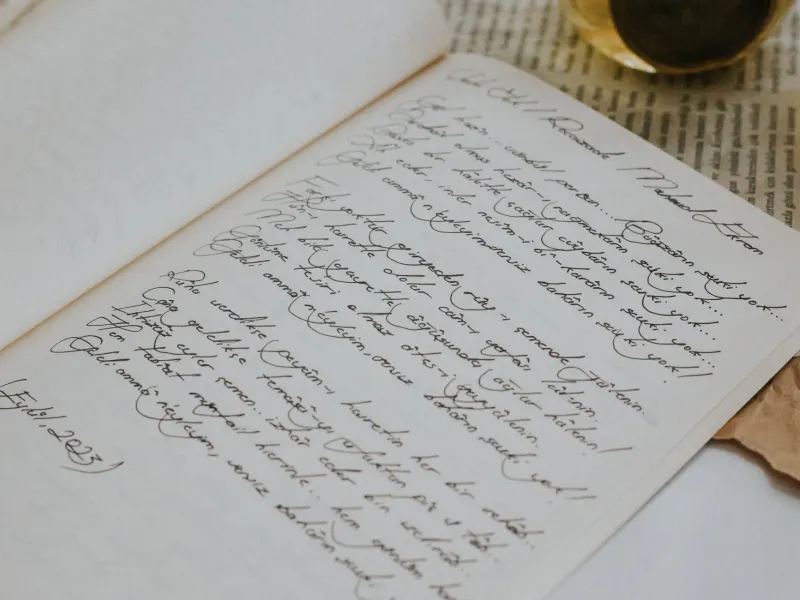
At a book fair in Portland last spring, a dealer displayed two copies of the same 1952 detective paperback side by side. The one on the left was clean, square-spined, its cover bright as the day it left the press. The one on the right was water-stained, cracked at the hinge, and dense with handwriting — a previous owner's running commentary, argumentative and funny, filling every spare inch of the margins. The clean copy was priced at forty dollars. The annotated one was twelve hundred, and it sold before lunch.
This is not an anomaly. It is the visible edge of a quiet but growing market in what the trade calls association copies of an unusual kind: not books signed by their authors, but books signed by their readers.
A Print Run of One
Limited editions derive their value from arithmetic — five hundred copies, ninety-nine numbered prints, a slipcase that closes forever. An annotated used book operates on a different logic entirely. Its scarcity is biographical. No one else on earth will ever own the 1963 library discard of To Kill a Mockingbird in which a student named Ruthie underlined every passage about Boo Radley and wrote, in careful cursive, "this is the whole book" beside the final page.
Dealers who specialize in these copies describe their work less as acquisition than as rescue. The best of them troll estate sales in the Midwest, church rummage sales in New England, and the dollar bins of thrift stores from Ohio to Oregon, looking for the handwriting that signals a life lived inside the object. A name and a date on the flyleaf is a start. A sustained marginal argument — reader against author, reader against reader — is the prize.
"You're not selling the book," one Massachusetts dealer told me. "You're selling the only surviving document of a conversation that ended fifty years ago."
The Collectors Who Prefer the Damage
The buyers in this market defy the collector stereotype. Many are not interested in condition at all, at least not in the grading sense. A pristine copy of a mid-century paperback tells you nothing except that someone kept it in a drawer. A battered copy with a grocery list tucked inside, a bus ticket used as a bookmark, and three generations of ownership inscribed on the frontispiece tells you everything.
Academics discovered this market long before collectors did. Scholars of reader reception now routinely cite marginalia as primary evidence — proof of how ordinary Americans actually read, argued with, and were changed by the books they owned. A heavily annotated copy of Silent Spring, its owner's fears recorded week by week in the margins, is in a real sense a more valuable historical artifact than an unopened first edition. The first edition documents what Rachel Carson wrote. The annotated copy documents what one reader did about it.
Collectors have followed the scholars. Online, dedicated communities trade photographs of found marginalia the way others trade rare stamps — the melancholy soldier's notes in a Western, the abandoned novel outline scribbled into the back of a cookbook, the furious underlining in a self-help book whose owner apparently did not take the advice.
The Question of Value
The market remains gloriously irrational. No grading service certifies marginalia; no price guide covers it. Value is set by feel — the wit of the annotation, the pathos of the inscription, the accident of whose book it happened to be. Copies annotated by known figures command enormous sums, of course. David Foster Wallace's doodled and underlined books have sold at auction for tens of thousands. But the deeper story in this market is the democratization of the artifact: the handwriting of the entirely unknown, rising in value simply because it was honest.
Which returns us to the question this column keeps circling: what, exactly, makes an edition limited?
The conventional answer is the print run. The publisher decides a number, the number creates scarcity, scarcity creates value. But a used book with rich marginalia is limited in a way no publisher can engineer. It is an edition of one, produced by accident, by a person who never intended to make anything at all. Its scarcity cannot be manufactured, counterfeited convincingly, or reissued. No publisher will ever announce a new printing of Ruthie's thoughts beside Boo Radley.
Fakes, Naturally, Will Follow
Where value appears, forgery soon follows. Dealers now speak of "aged" marginalia — annotations artificially yellowed and coffee-stained to simulate decades of use. The forgery problem is harder than it is for signatures, oddly enough, because the genuine article is so ordinary: real marginalia is sloppy, hesitant, written in cheap ballpoint that skips. The fake tends to be too fluent, too literary, too consistently clever. Real readers are tedious as often as they are brilliant, and that tedium is, paradoxically, the authentication.
For the collector willing to look, the supply is still out there — vanishing steadily as estates are emptied into dumpsters and paperbacks are pulped, but out there. Every flea market in America holds a box of books in which someone, decades ago, could not keep quiet.
The lesson for those of us who publish, collect, and treasure limited editions is an uncomfortable one. We spend enormous effort controlling the moment a book leaves the printer: the paper stock, the numbering, the slipcase. The market in annotated copies suggests we have been admiring the wrong half of the object's life. A book becomes limited twice — once at the press, and once in the hands of the reader who marked it, argued with it, and made it theirs. Only the second edition is truly one of a kind. And it is the one nobody ever planned to sell.