Half-Birthday Hype: When Every Milestone Becomes an Excuse to Sell You the Same Book Again

The Shrinking Milestone
There was a time when an anniversary edition meant something. A studio waited for the silver or golden anniversary — twenty-five years, fifty — and marked it with a restored print, a remastered recording, a scholarly introduction. The gap between celebrations was long enough that each one felt earned.
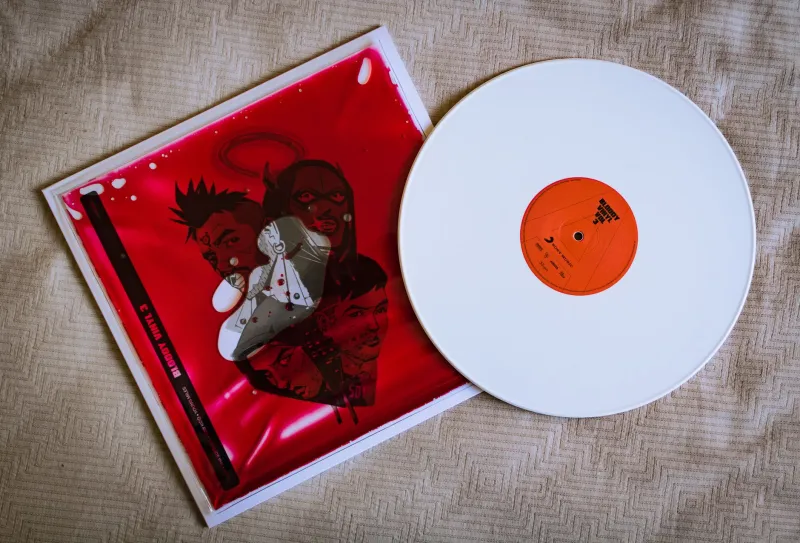
That era is over. Walk the aisles of any Barnes & Noble or scroll through a Criterion drop calendar and you will find anniversary editions of works celebrating birthdays so minor they would barely warrant a card. The tenth anniversary of a film that came out last decade. The fifteenth anniversary of an album pressed on 'anniversary marbled' vinyl that is sonically identical to the original. The twentieth anniversary 'definitive' hardcover of a novel that already received a 'definitive' hardcover at fifteen.
The math is no longer about reverence. It is about inventory cycles.
The Arithmetic of Nostalgia
Publishers and studios have discovered a simple truth: the calendar is the cheapest marketing tool in existence. Unlike a new adaptation, a reboot, or a sequel, an anniversary reissue requires no rights negotiation, no creative risk, and no new talent. It requires only a new number on the cover and, ideally, a foil stamp.
Consider the cadence. A property hits its tenth year — steelbook. Twelfth — 'collector's middle chapter' box. Fifteenth — deluxe vinyl with a reproduced tour poster. Eighteenth — why not? Twentieth — the 'definitive' restoration. Each interval is short enough that the previous edition has not fully depreciated in the buyer's memory, but long enough that the buyer's guilt over the last purchase has begun to fade.
One collector in Columbus, Ohio, told us she owns four copies of the same graphic novel: the original trade paperback, the tenth anniversary hardcover, the fifteenth anniversary slipcase edition, and the twentieth anniversary 'restored and remastered' volume with recolored artwork she does not prefer. 'I keep buying the same story,' she said. 'At some point you realize you're not a reader anymore. You're a subscriber to a numbering scheme.'
What 'Definitive' Can No Longer Mean
The word has been run through the machine too many times. If a twentieth anniversary edition is definitive, what was the fifteenth anniversary edition? What was the 'collector's edition' before it? The vocabulary of permanence has been repurposed for planned obsolescence.
There is a real cost here, and it is not only financial. When everything is a definitive edition, nothing is. The collector's trust — the implicit contract that a publisher is offering the last word on a work — erodes with each incremental reissue. Buyers begin to hesitate, not because they love the work less, but because they have learned to assume a better version is eighteen months away. Scarcity built this market. Predictable repetition may be the thing that unbuilds it.
The Fans Who Feel Burned
Online forums are full of a particular kind of lament: the collector who purchased the elaborate anniversary box set, only to see a superior version announced before the shrink wrap was off. The frustration is rarely about money alone. It is about being treated as an extraction target rather than an audience.
And yet the strategy persists because, honestly, it works. Anniversary editions sell. The emotional hook — it has been ten years since you first watched this at midnight with your friends — is powerful, and it is not dishonest. The work genuinely mattered. The memory is genuinely real. What is questionable is the packaging of that memory as a limited object, again and again, at ever-shorter intervals.
A Modest Proposal for Patience
No one is arguing that restoration is bad. Remastering a classic, rescuing a fading master, adding scholarly context — these are genuine contributions to cultural preservation. The critique is of rhythm, not restoration. A work honored once a decade reads as a tribute. A work honored every thirty-six months reads as a subscription.
The healthiest response may be the one collectors are slowly teaching themselves: wait. The definitive edition of a definitive edition is always in production. Let the foil stamping settle. Buy the work once, well, and spend the savings on something that has not yet been celebrated at all.
Anniversaries should mark the passage of time. They should not be a mechanism for selling it back to us at a markup every time the odometer rolls over.