Pulp Friction: When a Publisher's Final Act Is Erasure
The Contract Clause Nobody Reads
Buried in the distribution agreements of American publishing sits a provision that would alarm most book buyers: the remainder-and-pulping clause. When a title fails to sell through, the publisher retains two options. Discount the copies to oblivion, or destroy them. Increasingly, the industry chooses destruction — because a discounted book drags down the perceived value of every copy still standing on a shelf, while a pulped book simply ceases to exist.
The math is brutally rational. Warehousing unsold inventory costs money by the pallet, per month. Shipping heavy stock back to a distribution center costs more than the paper is worth. And in the collector's economy, scarcity is currency. A first printing that was pulped after six weeks on sale is, by accident of commerce, rarer than many limited editions produced on purpose.
Destruction as the Last Chapter
There is something almost literary about it. A book's life normally ends when it is read, donated, or left in a beach house. Pulping is different: it is the publisher formally retracting the object from the world. The final act of publishing, in these cases, is not creation but subtraction.
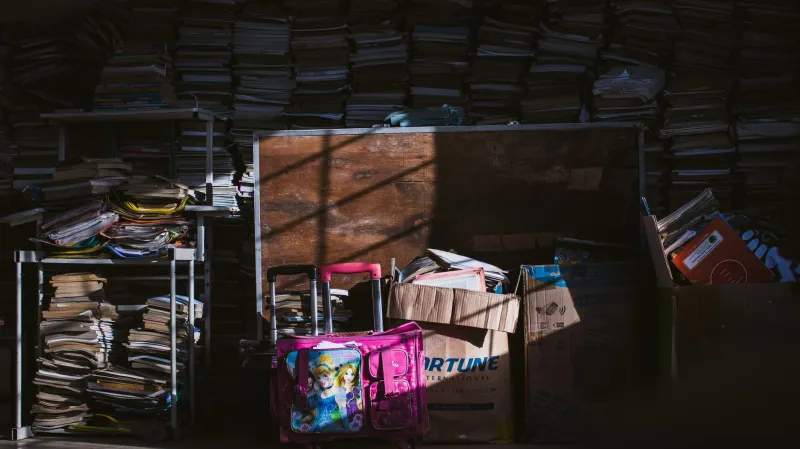
Industry veterans describe the process without drama. Returns arrive in gaylords — the large cardboard containers of the book trade — and are fed into industrial shredders. The resulting slurry is recycled into new paper stock, which may, in a twist no novelist would dare invent, become the pages of a future bestseller. The unsold novel dies so that a stranger's paperback can be born.
But rational as it is, the practice leaves gaps in the historical record. Bibliographers who trace printing histories rely on surviving copies to document states, errors, and jacket variants. When thousands of copies vanish in a single afternoon, the census of that book thins overnight.
The Survivor Hunters
This is where the collectors come in. A loose network of American bibliophiles — concentrated in the used-book strongholds of the Northeast, the Pacific Northwest, and the online forums where condition-obsessed dealers congregate — has made a specialty of what they call survivor editions: copies whose only distinction is that they narrowly escaped the shredder.
One collector, a retired logistics manager from Ohio who asked to be identified only by his forum handle, described the appeal in blunt terms. "A signed copy tells you a story about an author. A survivor copy tells you a story about the machine. You're holding the one that got away."
The hunt has its own grammar. Collectors study remainder marks — the dots or lines stamped on the bottom edge of discounted books — precisely because their absence can indicate a copy that never entered the discount stream. They track print run numbers on copyright pages. They note which titles a publisher announced for destruction in trade publications, then watch the secondary market for copies that surface afterward, like birds returning to an area that was recently burned.
Why Scarcity Hits Harder When It's Accidental
The psychology here is familiar to anyone who reads this site. Engineered scarcity — the numbered plate, the slipcase, the drop — announces itself. Accidental scarcity whispers. A book pulped in 1997 and rediscovered in an estate sale in 2024 carries no certificate, no provenance beyond a pencil notation on the flyleaf. Its rarity must be argued, documented, and believed.
That argumentative quality is, paradoxically, what gives these books their charge. A limited edition of 500 is rare by decree. A survivor is rare by contingency — and contingency is closer to how most of us actually experience value. Things matter more when we know they almost didn't exist.
There is also a moral undertone that collectors rarely say aloud at book fairs. Every survivor copy is a small rebuke to the economics that condemned its siblings. It is proof that the market's verdict, however total, is never quite complete.
The Ethics of the Shredder
Not everyone celebrates the hunt. Librarians and free-culture advocates have long argued that pulping is a form of quiet censorship by spreadsheet — books erased not for their content but for their sales figures. When a publisher destroys stock, it also destroys the possibility that a future reader, in a different mood or a different decade, might have found the book that the market missed.
The counterargument is equally practical: publishers are not archives, and the alternative — warehouses rotting with unsold inventory — serves nobody. Some houses have found middle paths, donating remainders to literacy nonprofits or redirecting them to prison libraries, though donation, too, carries branding costs that pulping avoids.
Documenting What Was Meant to Disappear
For Krem Editions readers, the pulping phenomenon sits at the intersection of everything we cover: the physical book as object, scarcity as design, and the strange afterlives of print culture. A handful of independent researchers have begun building public censuses of survivor copies — photographs, print-run data, acquisition histories — a kind of digital ark for books that were nearly erased.
It is a fitting project. Publishing has always been an industry of surpluses and shortages, of bets placed on paper. The pulped editions remind us that behind every book on the shelf stands a shadow inventory that did not make it. Collectors who chase the survivors are not merely acquiring rarities. They are keeping minutes for a meeting the industry hoped no one would attend.