The Middlemen Who Became the Market: How Resellers Seized Control of Limited Culture
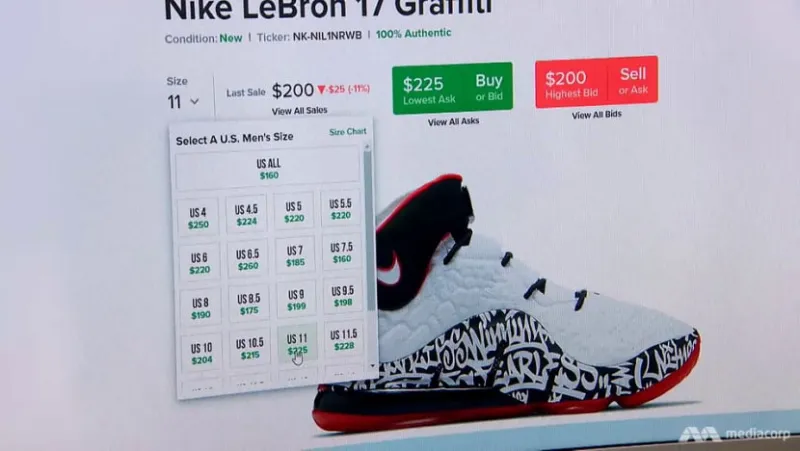
Photo: secondary market resale collectibles trading cards sneakers price tags, via dam.mediacorp.sg
There is a particular kind of frustration that has become familiar to collectors in the modern era. A limited-edition art book drops at noon on a Tuesday. By 12:03, every unit is gone. By 12:15, three copies have appeared on StockX at three times the original price. By evening, a Discord server with a membership fee is offering "insider access" to the next release — for a monthly subscription that costs more than the object itself.
This is not a glitch in the system. This is the system.
The secondary market, long treated as an unsavory but tolerable byproduct of scarcity-driven releases, has undergone a profound transformation. What was once a gray zone of opportunistic flipping has evolved into a sophisticated, stratified ecosystem with its own codes of conduct, its own power brokers, and its own aesthetic sensibility. Resellers, once dismissed as parasites on collector culture, have repositioned themselves as curators — and in doing so, they have fundamentally altered the meaning of "limited edition" in 2024.
From Afterthought to Infrastructure
The mechanics of the modern secondary market did not emerge overnight. StockX, launched in 2016 with a focus on sneakers, provided the first genuinely transparent price-discovery mechanism for collectibles. By treating limited-edition goods like financial instruments — complete with bid-ask spreads and historical price charts — it imported the logic of the stock exchange into a space previously governed by gut instinct and personal relationships.
Grailed followed a similar trajectory in fashion, while platforms like eBay, long the default venue for secondhand sales, found themselves increasingly outflanked by verticalized competitors offering authentication services and community trust. The result was a market that began to feel less like a swap meet and more like a commodity exchange.
But it is the private Discord communities that represent the most consequential shift. These servers, often invitation-only and governed by internal reputation systems, function as something between a trading floor and a social club. Access is itself a commodity. Within these spaces, information about upcoming drops, relationships with brand insiders, and the ability to move inventory quickly are all forms of capital. The reseller, in this context, is not simply someone who buys low and sells high. He or she is a node in a network that shapes demand before a product even reaches the public.
The Ethical Architecture of the Flip
Creators and publishers who traffic in limited editions occupy an uncomfortable position in this landscape. The scarcity that gives their work value is, in part, manufactured — and the secondary market is simply the mechanism by which that manufactured scarcity finds its true price. To complain about resellers is, in some sense, to complain about the logical consequence of one's own business model.
And yet the tension is real. Many boutique publishers and independent artists working in limited print runs express genuine distress when their work — priced accessibly to serve a community of dedicated collectors — is immediately captured by resellers and relisted at multiples that exclude the very audience for whom it was intended. The art book priced at eighty dollars to honor the collector who followed a project from its earliest days becomes a two-hundred-and-fifty-dollar commodity on a platform where that history is invisible.
Some creators have responded with structural countermeasures: verified waitlists, purchase limits tied to account history, regional restrictions, and direct-to-consumer channels that bypass conventional retail entirely. Others have embraced the secondary market as a form of validation, reasoning that a robust resale price signals cultural significance.
Neither response fully resolves the underlying tension. The secondary market does not distinguish between a speculator and a devotee. It processes both with equal indifference.
Resale as Curation
There is, however, a more generous reading of what skilled resellers actually do. The collector who has spent years developing expertise in a particular category — whether that is limited-edition graphic novels, archival art prints, or cult soundtrack pressings — brings genuine knowledge to the act of acquisition. The ability to identify undervalued objects before the broader market catches on is a form of connoisseurship, however commercially motivated.
In this sense, the most sophisticated secondary-market operators function less like scalpers and more like dealers in the traditional art-world sense: individuals whose taste and knowledge help surface objects of lasting value from the noise of mass production. The Discord server that correctly identifies which small-press release will become the defining collectible of a given season is performing a curatorial function, even if profit is the primary motive.
This reframing is not merely rhetorical. Several boutique publishers have begun to engage resale communities as informal market-intelligence operations, monitoring secondary prices to calibrate future print runs and identify which titles warrant expanded editions. The reseller's price signal, in this model, becomes a data point in the creator's editorial decision-making.
What "Limited" Means Now
The deeper consequence of the secondary market's ascendance is a fundamental renegotiation of what the phrase "limited edition" actually signifies. Historically, the limitation was a statement of artistic intent: a finite number of objects made with care, for an audience prepared to value them. The number conferred meaning.
In 2024, that meaning is contested. A print run of five hundred means something different if three hundred units are immediately captured by a coordinated resale operation. The collector who acquires through secondary channels at a significant premium is not participating in the experience the publisher intended. She is participating in a parallel market that has overlaid its own logic onto the original object.
This is not necessarily a diminishment. Objects carry the histories of their circulation, and a piece that has passed through the secondary market carries evidence of its own cultural moment — the demand it generated, the networks it activated, the prices it commanded. That history is part of what it means to own something rare.
But it does require publishers, collectors, and critics to think more carefully about what they are protecting when they invoke the language of limitation. The number on the colophon is no longer sufficient. The conditions of access, the integrity of the distribution channel, and the relationship between price and community all shape whether a limited edition fulfills its promise — or simply becomes inventory in someone else's portfolio.
The reseller did not create this complexity. The market did. The reseller simply learned to live there first.